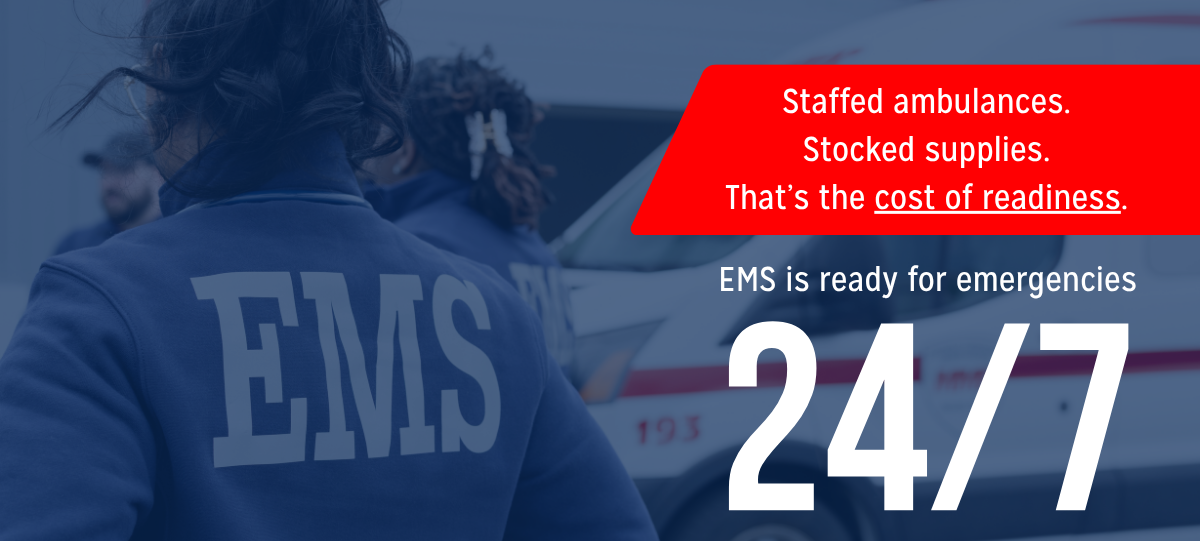
The Cost of Readiness: How an Ambulance Is Always Ready When You Need It
Emergency medical services operations don't just incur costs when someone calls 911. They incur costs every minute of every day, ensuring help is ready when your community needs it.
WHAT IS THE COST OF READINESS?
Unlike many healthcare services, EMS must be prepared to respond at any moment—24 hours a day, 365 days a year.
That means communities are paying not just for ambulance transports, but for everything required to keep trained professionals, vehicles, equipment and communications ready before the next emergency happens.
WHY EMS IS DIFFERENT
Unlike most healthcare providers who know when patients are coming, EMS providers must:
- Be available 24/7
- Respond immediately
- Travel to the patient
- Be prepared for any type of emergency
- Maintain enough staff and equipment for multiple emergencies happening at once
Whether the ambulance is transporting a patient or waiting for the next call, the costs continue.
THE HIDDEN COST OF BEING READY
Many of the largest EMS expenses occur even when no calls are coming in.
Examples include:
- Staffing ambulances around the clock
- Replacing medical equipment before it expires
- Maintaining emergency vehicles
- Keeping medications stocked
- Training personnel
- Meeting state and federal requirements
Communities are funding being prepared and ready—not simply ambulance responses.
WHY AMBULANCE BILLS DON'T COVER ALL EMS COSTS
Many people assume ambulance services are paid only through transport fees.
In reality:
- EMS agencies receive no payment when patients are treated but not transported.
- Reimbursement from Medicare and Medicaid often falls below the actual cost of providing care.
- Agencies must maintain the same level of readiness regardless of daily call volume.
- Rural communities often have higher readiness costs because ambulances must cover larger geographic areas.
|